What is a Red Alpha swordtail?
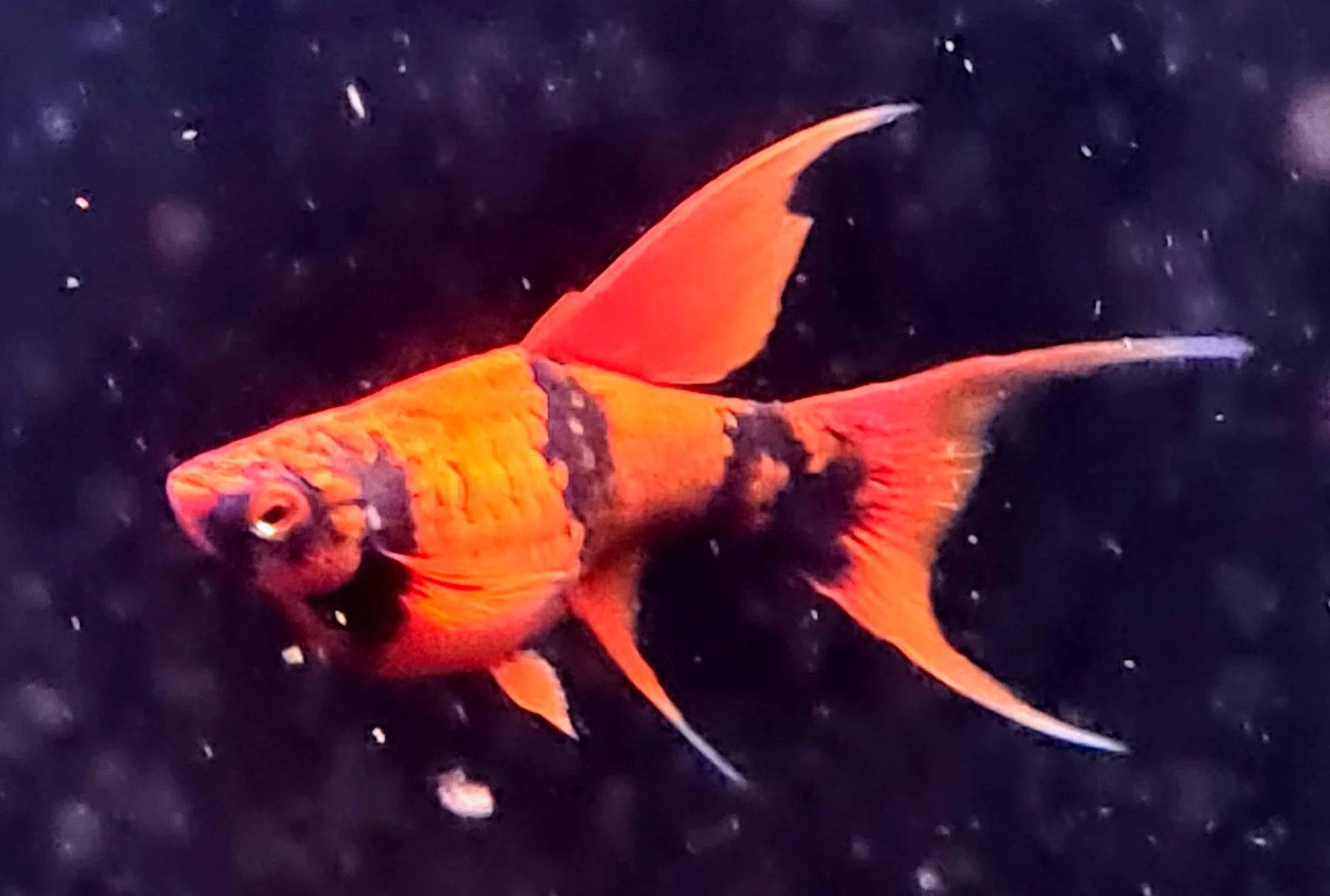
A colour form of the swordtail, Xiphophorus hellerii: a fire-red base covered with velvety black — the “alpha” colouring. No two fish share the same pattern, and the black usually deepens as the fish mature.
What makes a Red Alpha, a Red Ruby or a Marble — the colour, the genetics breeders have learned the hard way, and the fins. Written from our fish room and from the breeders who came before us.
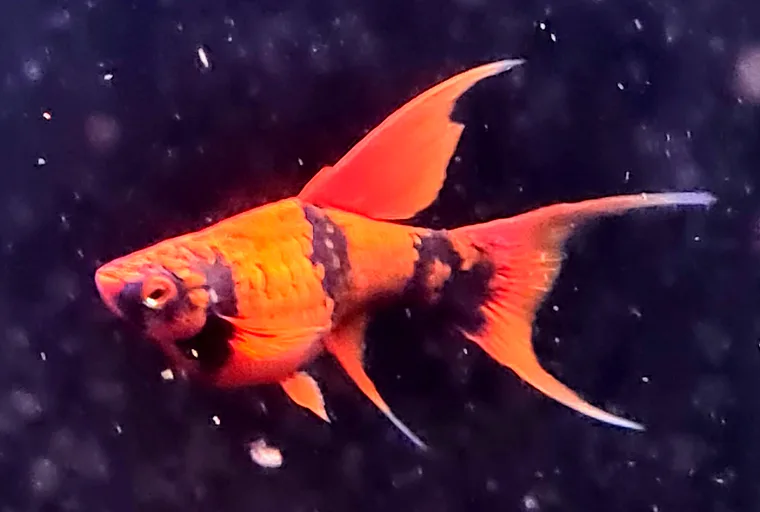
A colour form of the swordtail, Xiphophorus hellerii: a fire-red base covered with velvety black — the “alpha” colouring. No two fish share the same pattern, and the black usually deepens as the fish mature.
Breeders trace the name to the former East Germany (GDR), where it was given to fish from crosses of black Hamburg swordtails with other swordtails. Günther Schramm, who worked on them in the early 1980s, is often called the father of the modern Alpha — though early forms already existed in the 1960s.
No. The alpha colouring exists in other swordtail colours and fin forms too. Red-and-black is simply the most striking — and the one we breed.
Breeders describe the alpha colouring as recessive: only a small share of each generation shows the full colour. Most young fish never make the cut, which is why well-coloured adults are scarce and priced higher than common swordtails.
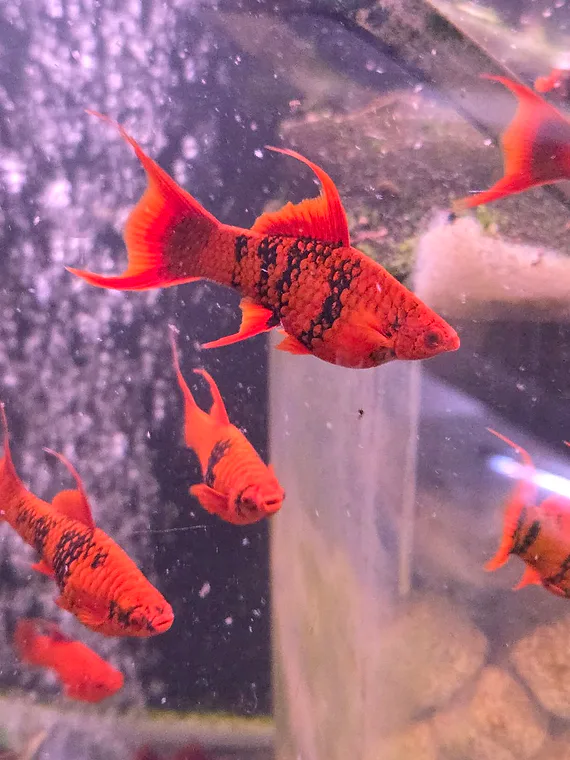
Breeders observe it behaving like a recessive trait: fish can carry it without showing it, and coloured parents give more coloured young. As far as we know no study has pinned down the exact gene yet, so this is breeder experience rather than lab science. We keep colonies of fully coloured fish and select the best of every generation.
In some broods only the females show the velvety black on red, while many males look like plain red (albino-like “Vienna”) swordtails. They still carry the genes, so the best of them stay in the colony.
Swordtails are livebearers that breed in groups: in each colony tank several males and females breed together, and the fry come from many crosses. That keeps the line healthy and varied. Our work is selection — every generation we keep the best-coloured, best-finned fish and move the rest on.
Yes. Young fish start orange-red with little black; the black and the marbling build up over months and keep increasing with age. That is why we list adults with recent photos and sell juveniles unsexed and unrated.
Black swordtails descended from the Hamburg strain can show a blue-green glimmer on their black scales that breeders call the “mirror”. In Alphas it is usually reduced or missing, which gives the black its velvety look.
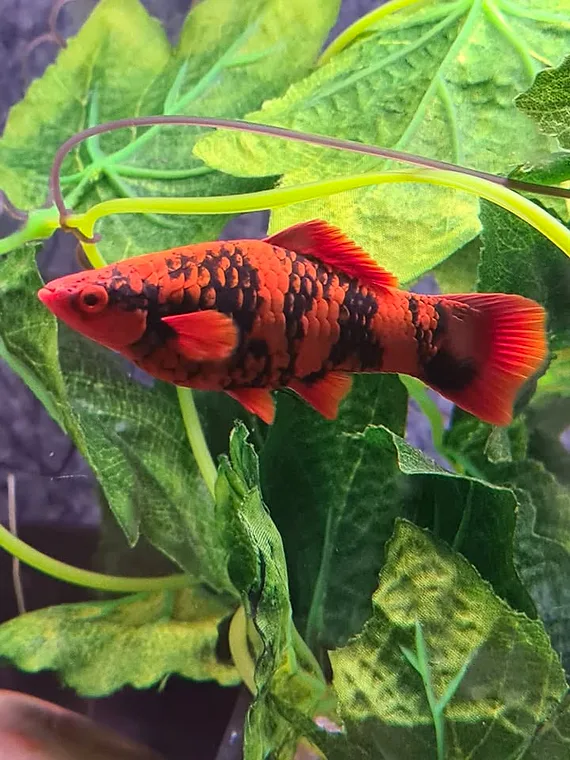
A swordtail with irregular black spotting — marbling — over the body. Marbles were long bred mostly on a whitish base; red-based marbled fish (sometimes sold as “Tiger”) took breeders much longer to achieve. Every Marble’s pattern is its own, and the black grows with age.
In a Red Alpha the black is velvety and covers large areas of the red body. In a Marble the black comes in spots and patches, so more of the red shows. Some fish sit in between — we list them under the variety they look most like.
“Red Ruby” is a hobby name rather than a standardised strain: a deep, wine-red swordtail with little or no black. Our Red Ruby colony comes from our own fish, selected generation after generation for the deepest red.
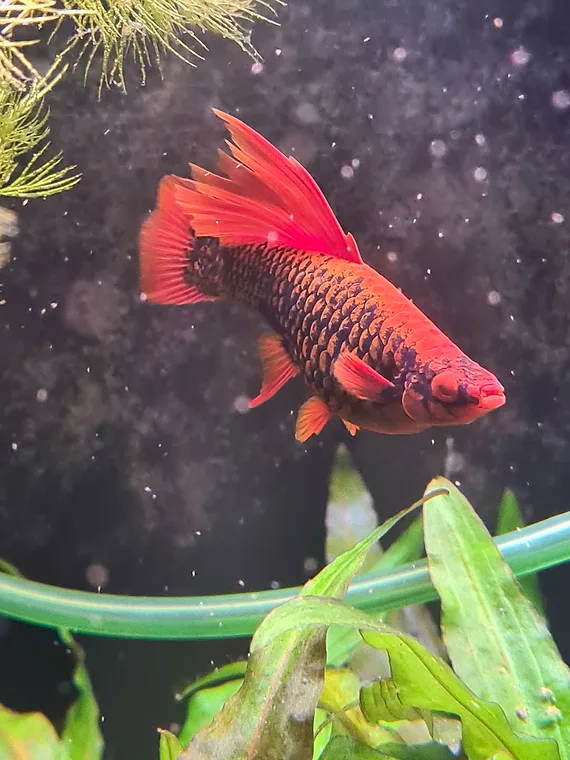
A lyretail has long top and bottom rays that give the tail the shape of a lyre. Breeders describe the trait as dominant. In lyretail males the gonopodium (the breeding fin) usually grows long too, so they rarely breed on their own — that is why our breeding groups use low-fin males with lyre-tailed females.
A hi-fin has a tall, flowing dorsal fin. It is also described as dominant, and hi-fin males can usually breed normally.
Lyretail: the full lyretail form with long lyre extensions. Lyre: lyre tips on the tail. Delta: a broad, triangular tail. King: extra-long, flowing fins. Hi-fin: a tall dorsal. Low fin: standard fins. Many fish combine two — a “Lyre + Delta” has lyre tips on a delta tail. You can filter by any of them on Our Fish.
Much of what is known about Alpha, Marble and fin genetics comes from breeders rather than published studies; we say so where it matters. Sources and notes are kept in our breeding records. More questions · Ask us
Red Alpha assistant
AI assistant · replies instantly
An AI assistant — answers can be imperfect. Chats are saved to help us improve. For orders, use the contact form.